
 简体中文
简体中文

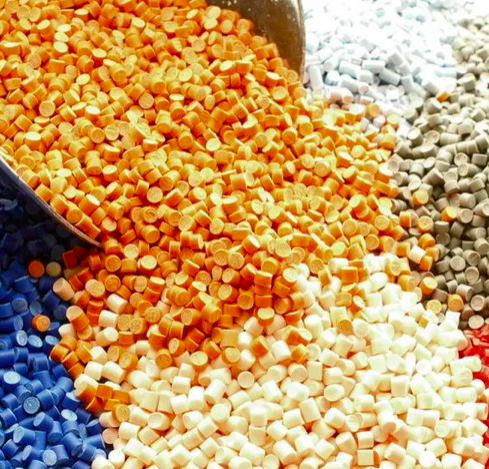
The addition amount of color masterbatch in the final resin is generally 2%-5%. If the color masterbatch is mixed correctly, the content of carrier resin in the final mixture accounts for 1%-3% or more. This makes it the largest additive in the additive family, so some details should be paid attention to when choosing a carrier resin. For example, the user's requirements for color, color stability, environmental requirements, and the role of color masterbatch in the final product, etc., make the formulation of color masterbatch increasingly complex.
The color masterbatch generally chooses the same resin as the product resin as the carrier, and the compatibility between the two is the best, but in complex cases, the fluidity of the carrier and the pigment dispersion and mixing distribution after selecting this carrier should also be considered. , these complex characteristics can only be obtained by a unified balance to obtain the most suitable masterbatch formulation.
Specifically, the five principles of carrier selection in masterbatch formulations are compatibility, fluidity, processability, high viscosity, and applicability.


The so-called compatibility refers to the ability of two substances to accommodate each other. According to the principle of similar compatibility, the color masterbatch carrier resin and the colored resin have the same or similar structure. Its compatibility is good. Under normal circumstances, the color masterbatch carrier resin and the base resin of the product should choose the same type of polymer, the purpose is to ensure that the carrier resin and the base resin have good chemical compatibility.
For example, AS resin can be used as the ABS color masterbatch carrier, and PBT can be used as the carrier of the PET color masterbatch. However, if the same type of resin is incompatible, it will affect the quality of colored products. For example, although polyethylene and polypropylene are both olefins, the color masterbatch using polyethylene as the carrier is no problem for injection molding, film blowing and other products, but The use of polyethylene carrier color masterbatch for polypropylene spinning will affect the spinnability and high brightness injection molding products, and there will be flow marks on the product. It also shows that although polyethylene and polypropylene are both olefin resins, the two resins' compatibility is not very good.
Even the universal color masterbatch using polyethylene wax as the carrier will inevitably have defects in the face of engineering plastics, and the surface is prone to "peeling". Therefore, the existing market scale of universal masterbatch is far from reaching the expected target.

The fluidity is that the fluidity of the masterbatch carrier resin itself is better, and the melt flow rate of the carrier is higher than that of the colored resin. If the same polymer as the plastic to be colored is used as the carrier, its molecular weight should be lower than that of the colored plastic (ie, the carrier). The melt flow rate is greater than the melt flow rate of the plastic to be colored). In this way, high melt flow rate masterbatches are easier to achieve ideal flow in the coloring screw and are easier to disperse in the bulk resin.
However, this method often has drawbacks. After all, the relationship between melt index and molecular weight cannot be ignored at any time. In the final analysis, molecular weight determines the performance of the resin, and the carrier resin with a high melt flow rate may be processed during final molding. It will lead to a decline in product performance, especially the coloring of engineering plastics. If a carrier resin with a molecular weight similar to the resin to be colored is selected, an appropriate amount of lubricant can be used to improve the fluidity of the overall color masterbatch, that is, to increase the melt index of the color masterbatch; otherwise, the low molecular weight resin is prone to degradation, Even worse, it will seriously affect the appearance of the product


High resin viscosity and good fluidity may be a pair of contradictions, but the higher the melt viscosity of the carrier resin, the higher the shear viscosity of the system, and the greater the shear force transmitted from the molten resin to the pigment particles, which is beneficial to the pigment particles. dispersion. Therefore, how to unify the contradictions requires a comprehensive consideration in the selection of the carrier.
For example, the molecular structure of conventional LLDPE is characterized by its linear main chain with few or no long chain branch, but contains short chains, and the absence of long chains makes the polymer more crystalline. Under the same molecular weight, the melt viscosity of LLDPE with linear structure is higher than that of LDPE with non-linear structure. Under the same melt flow rate, the melt viscosity of LDPE is also significantly lower than that of LLDPE. Therefore, it is not surprising that high melt flow rate linear low-density polyethylene (LLDPE) was chosen to be used or partially used as a carrier for polyolefin masterbatches

Applicability means that the carrier needs to meet the production needs of customers, but also needs to meet the needs of the product, and cannot affect the surface and internal quality of the product. When the color masterbatch is used for plastic coloring, it should not affect the mechanical properties of plastic products due to improper use of the carrier. For example, when selecting color masterbatches for degradable plastic products, it is necessary to avoid the use of masterbatches with non-degradable materials as carriers to prevent the impact on the determination of the properties of degradable products.
For example, LLDPE is used as the carrier resin for PPR pipe color masterbatch, which has good compatibility with PPR, but the high melt index of LLDPE means that the molecular weight is too low to withstand hot water pressure; HDPE carrier resin has good compatibility with PPR. But the heat resistance time is very short
OUR MASTERBATCH RANGE (Click to Know More details)
* Color masterbatch
* Black masterbatch
* White masterbatch
* Additive masterbatch
* Filler masterbatch
masterbatch requirement
Plz contatct: +8613326834984
Mail:gzplastics666@outlook.com


